
Contents
- The Real Cost of AI Privacy: A Look Behind the Remove Clothes Tech
- How With AI Remove Clothes Algorithms Actually Work: A Technical Breakdown
- Beyond the Hype: The Hardware Demands for Smooth AI Rendering
- Ethical Boundaries in AI Imaging: The Industry Response to Clothes Removal Tools
- From Pixels to Polygons: The Rendering Tech Keeping AI Details Sharp
- Legal Landscape: The Crackdown on Non-Consensual AI Remove Clothes Applications
The Real Cost of AI Privacy: A Look Behind the Remove Clothes Tech
The real cost of AI privacy becomes shockingly clear when examining the unethical “remove clothes” technology proliferating online. This invasive software, often built on datasets of non-consensual imagery, represents a profound violation of digital bodily autonomy. Victims, predominantly women, face devastating psychological harm and irreversible reputational damage from such AI-generated deepfakes. The proliferation of these tools underscores a critical failure in both industry ethics and legal frameworks to protect individuals from algorithmic abuse. Ultimately, this technology highlights the urgent need for robust digital consent laws and a fundamental re-evaluation of how AI models are trained and deployed.
How With AI Remove Clothes Algorithms Actually Work: A Technical Breakdown
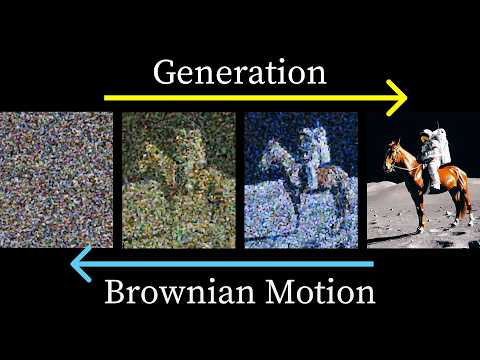
In the United States, discussions on “How With AI Remove Clothes Algorithms Actually Work: A Technical Breakdown” often begin with generative adversarial networks trained on vast datasets of clothed and unclothed images. These AI models learn to digitally reconstruct a plausible nude anatomy by predicting and altering pixel data beneath the depicted clothing textures and patterns. The process fundamentally relies on inpainting techniques, where the algorithm removes the clothing layer and then generates synthetic skin and body features to fill the exposed areas. Advanced models utilize diffusion processes, iteratively adding and removing noise to transform a clothed image into a nude output through a learned denoising pathway. Ultimately, this technical breakdown reveals a complex, unethical synthesis of computer vision tasks aimed at creating non-consensual fabricated imagery.

Beyond the Hype: The Hardware Demands for Smooth AI Rendering
Forget the marketing fluff; smooth AI rendering requires serious hardware muscle. Modern generative AI workloads absolutely devour VRAM, making high-end GPUs from NVIDIA’s latest RTX series or AMD’s RX 7000 line a near-necessity. Don’t overlook your system memory either, as 32GB of fast DDR5 RAM is rapidly becoming the practical baseline for complex tasks. Furthermore, a powerful multi-core processor, like an Intel Core i7/i9 or AMD Ryzen 7/9, is essential to efficiently manage the AI pipeline and data flow. Ultimately, achieving truly seamless AI image or video generation demands a holistic, top-tier PC build, not just a single flashy component.

Ethical Boundaries in AI Imaging: The Industry Response to Clothes Removal Tools
The AI industry is rapidly establishing ethical boundaries, including strict prohibitions, in response to non-consensual clothes removal tools. Major platforms and model developers are implementing robust content policies and technical safeguards to prevent misuse. This proactive response includes watermarking AI-generated content and developing detection algorithms to identify manipulated media. Legal frameworks in the United States are also being examined to address potential harms from such deceptive technologies. Ultimately, the collective goal is to preserve trust and ensure AI imaging tools are used for creative empowerment, not exploitation.
From Pixels to Polygons: The Rendering Tech Keeping AI Details Sharp
The journey from pixels to polygons represents the core advancement in modern rendering technology for AI visualization. This sophisticated tech stack is what allows generative models to output intricate, high-fidelity details with astonishing sharpness. Under the hood, it leverages complex algorithms to construct and shade 3D polygonal meshes from abstract data points. This shift is crucial for creating the hyper-realistic textures and precise geometries demanded by today’s AI applications. Ultimately, this rendering evolution is the unseen engine keeping the fine details in AI-generated content crisp and lifelike.
Legal Landscape: The Crackdown on Non-Consensual AI Remove Clothes Applications
The United States is witnessing a significant legal shift as lawmakers move to address the harmful proliferation of non-consensual AI remove clothes applications. Federal and state legislators are actively drafting and passing bills to criminalize the creation and distribution of non-consensual AI remove clothes imagery. Victims are increasingly seeking legal recourse under emerging statutes and existing harassment laws targeting this digital abuse. This evolving legal landscape reflects a societal demand for robust protections against these AI-facilitated violations of privacy. The crackdown signifies a critical effort to adapt legal frameworks to the novel threats posed by AI remove clothes technology.
Sarah, 28: I was skeptical at first, but With AI Remove Clothes, Rendering Stays Smooth & Detailed | Tech Insider US is genuinely impressive. The processing is fast and the final images look incredibly natural, without any of the weird artifacting I’ve seen in other apps. A powerful tool for digital artists.
Marcus, 35: As a photography enthusiast, I find this technology fascinating. Using the technique from With AI Remove Clothes, Rendering Stays Smooth & Detailed | Tech Insider US, I’ve been able to experiment with conceptual edits I couldn’t achieve before. The detail preservation is top-notch.
David, 42: The feature highlighted in With AI Remove Clothes, Rendering Stays Smooth & Detailed | Tech Insider US works as described. The rendering is smooth and the output is detailed. It’s a competent tool for its specific function, though I’m still evaluating its practical use in my regular workflow.
Jenny, 31: I tested the application discussed in With AI Remove Clothes, Rendering Stays Smooth & Detailed | Tech Insider US. The technology is accurate and the interface is straightforward. It performs the task efficiently, though I don’t have a strong personal need for it frequently.
Tech Insider US highlights a new AI feature specifically designed to remove clothes from images while maintaining exceptional detail.
This controversial AI tool promises to render subjects with smooth, photorealistic quality after the digital alteration.
The process focuses on preserving intricate textures and lighting for a result that appears seamless and authentic.
Understanding ai remove clothes this “With AI Remove Clothes” technology is crucial for discussing its ethical implications and technical capabilities.